TRUSTED TILE ADHESIVE MANUFACTURER · ISO 9001:2015 CERTIFIED

Introduction
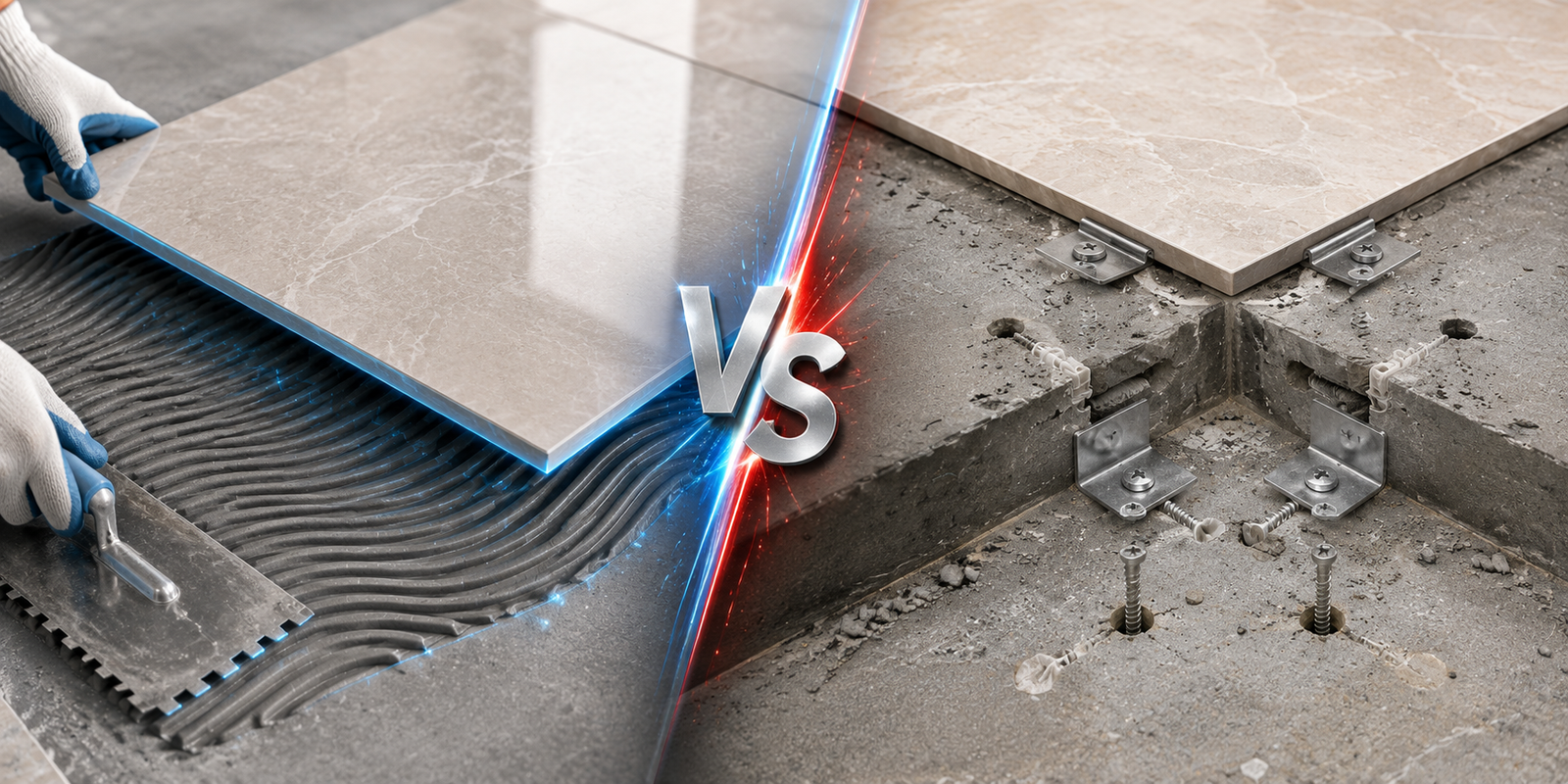
For decades, manufacturers relied heavily on screws, bolts, rivets, and welding for assembly. Today, industrial adhesives are becoming the preferred choice for many applications.
Comparison Table
| Feature | Industrial Adhesives | Traditional Fasteners |
|---|---|---|
| Weight | Lightweight | Heavier |
| Appearance | Seamless Finish | Visible Fasteners |
| Corrosion Resistance | Excellent | Can Corrode |
| Stress Distribution | Evenly Distributed | Point Loads |
| Material Compatibility | Similar & Dissimilar Materials | Limited |
| Production Speed | Faster | Slower |
Advantages of Adhesives
- Bond dissimilar materials
- Improved aesthetics
- Reduced material damage
- Better vibration resistance
- Lower maintenance costs
When Traditional Fasteners Are Better
Mechanical fasteners may still be preferred when:
- Disassembly is required
- Extremely high structural loads exist
- Maintenance access is critical
Hybrid Solutions
Many modern industries now use a combination of:
- Adhesives
- Rivets
- Screws
- Welding
This approach combines structural strength with flexibility and durability.
Final Thoughts
Industrial adhesives are no longer simply alternatives to fasteners—they have become essential components of modern manufacturing and engineering innovation. Businesses adopting advanced bonding technologies gain significant advantages in performance, cost savings, and production efficiency.